
Order Now · Ships Spring 2026
Salvia officinalis 'Purpurascens' (purple sage)
Salvia officinalis 'Purpurascens' (purple sage)
Culinary Sage • Ornamental Foliage • Pollinator Friendly
📦 Shipping is charged at real carrier rates.We don’t mark up shipping—costs reflect distance from our nursery and careful plant packing.
🌱 6-plant minimum per order — mix & match any varieties
📦 Ships in a 2⅜” square x 3¾” deep band pot — well-rooted & ready to plant
Couldn't load pickup availability
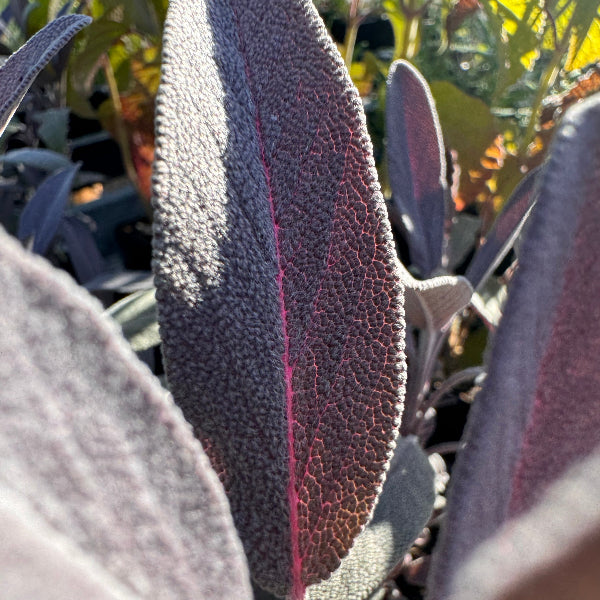
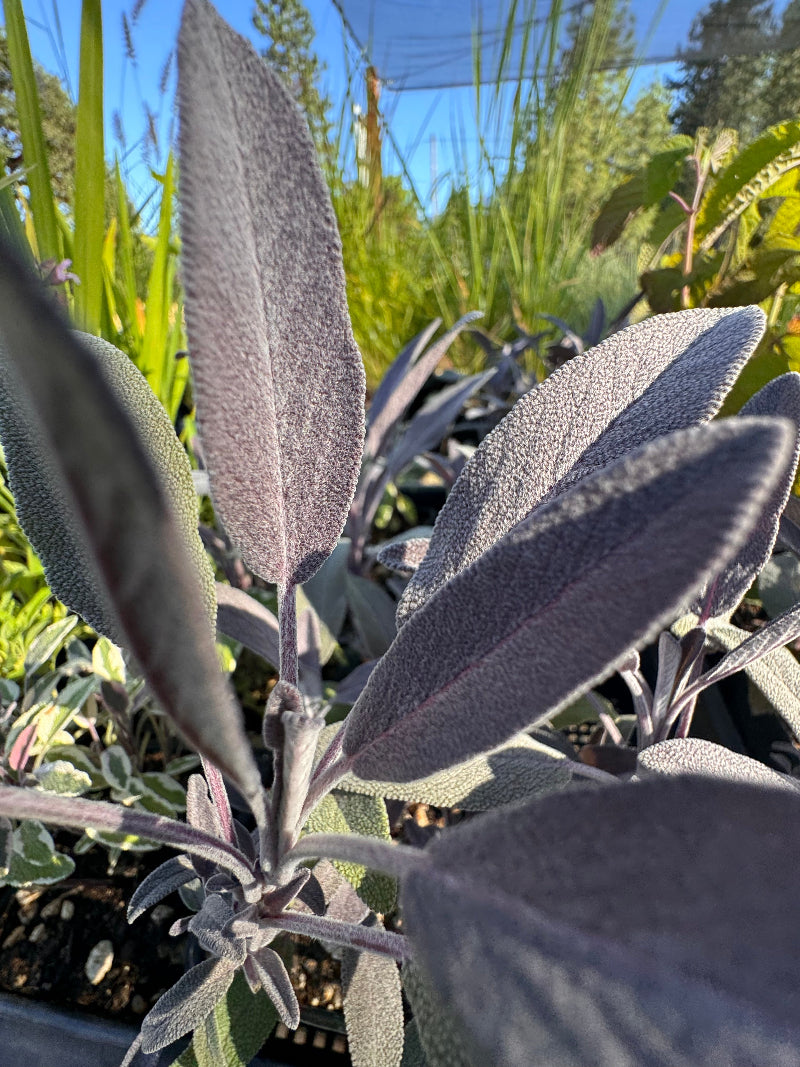
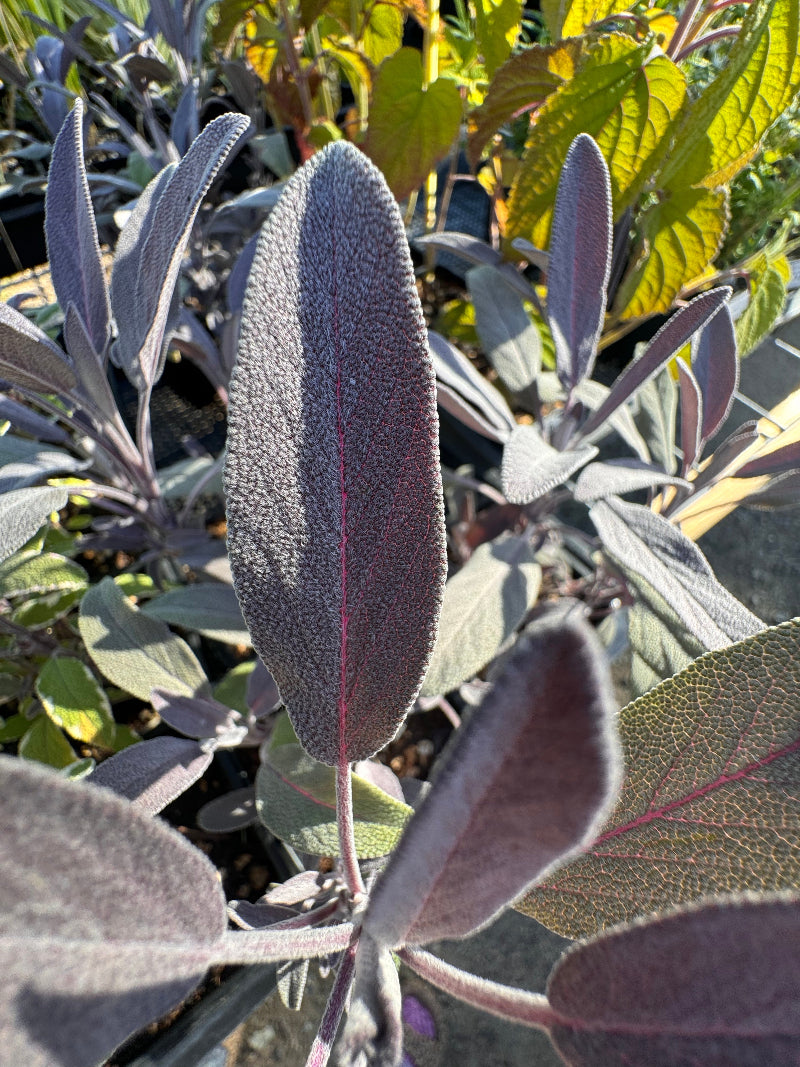
Purple Sage is a striking cultivar of common culinary sage, grown as much for its deep purple, velvety foliage as for its classic sage flavor. The leaves hold their color well through the growing season, adding texture and contrast to herb gardens, borders, and mixed plantings.
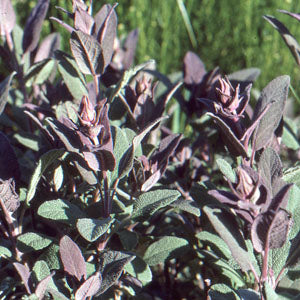
In spring, plants send up spikes of purplish-blue flowers that attract bees and other pollinators. The foliage is fully edible and can be used anywhere traditional sage is called for, with the added benefit of lending a subtle purple tint to vinegars and infusions.
Purple Sage grows as a compact, woody-based shrub and is long-lived when planted in full sun and well-drained soil. It’s a reliable choice for both ornamental and culinary gardens.
WHY GROW PURPLE SAGE
- Rich purple foliage with strong visual appeal
- Classic sage flavor suitable for cooking
- Edible leaves that color vinegars and infusions
- Spring flowers support pollinators
- Evergreen in mild climates
GROWING INFORMATION
- Botanical Name: Salvia officinalis ‘Purpurascens’
- Plant Type: Evergreen to deciduous shrub (depending on climate)
- Size: About 2 ft tall x 3 ft wide
- Sun: Full sun
- USDA Zones: 5–9
- Water: Low to moderate once established
- Soil: Well-drained soil is essential
Good air circulation and occasional pruning help keep plants compact and productive over time.
CULINARY USES
Flavor:
Classic savory sage flavor—earthy, warm, and aromatic.
Common Uses
- Fresh or dried leaves for meats, stuffing, and vegetables
- Purple-tinted vinegars and herb infusions
- Sage butter, oils, and compound butters
- Decorative edible leaves for plating and garnish
Harvest lightly but regularly to encourage fresh growth and maintain strong flavor.
The spring flowers provide an early nectar source for bees, making Purple Sage both useful in the kitchen and supportive of garden ecology.
- Poultry, pork, and roasted root vegetables
- Garlic, onion, and thyme
- Lemon zest and white wine vinegars
- Olive oil and butter
POLLINATOR VALUE
The spring flowers provide an early nectar source for bees, making Purple Sage both useful in the kitchen and supportive of garden ecology.
POT SIZE: 2⅜” square x 3¾” deep band pot
Share
What to Expect With Your Plants
What size plants will I receive?
Most plants ship in 2 3/8” x 3 3/4” band pots—ideal for healthy root growth.
Top growth varies by variety and season, but every plant arrives well-rooted, actively growing, and ready to plant.
Grown naturally without artificial heat or lights, our plants are hardy, adaptable, and ready to thrive in real garden conditions.
When will my plants ship?
We schedule plant orders based on your area’s average last frost date and when each plant is truly ready to ship. You’ll receive an email with your estimated ship date once your order is scheduled.
Orders ship Monday–Wednesday via UPS or USPS (2–3 day service), so your plants arrive before the weekend and spend less time in transit. Shipping begins in spring—usually mid-April—when weather and plant health align, so your plants arrive strong, well-rooted, and ready to thrive.
Do you guarantee your plants?
We stand behind our plants and our packing process. While we can't control weather or how plants are cared for after arrival, we do guarantee that your plants will arrive healthy and in good condition. If there's an issue, just reach out and we're happy to help.
Are your plants inspected for plant health and disease?
Yes. Our nursery is inspected at least twice each year by the Oregon Department of Agriculture and meets state plant health and disease standards.
Why does shipping cost what it does for live plants?
Shipping live plants requires careful packaging, seasonal timing, and fast transit to ensure they arrive healthy.
Our shipping rates are calculated in real time based on box size, weight, and destination, and we always select the best available option for safe, timely delivery.
We never inflate shipping costs — you pay what it costs us to ship your order safely.
Have more questions?
We want you to feel good about your plant order. Find answers about shipping, sizing, care, and guarantees in our full FAQ.
Salvia officinalis 'Purpurascens' (purple sage)