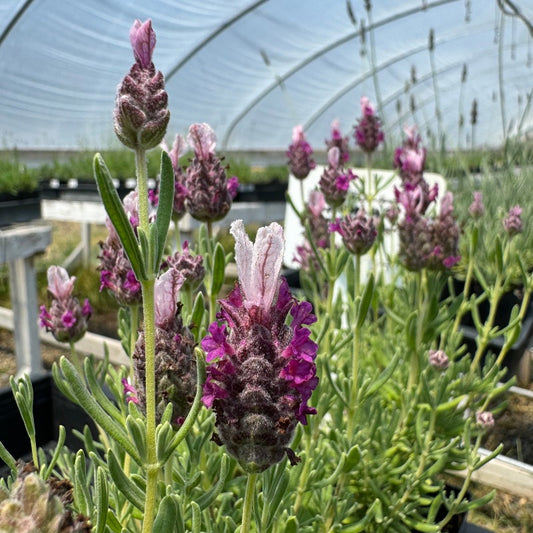
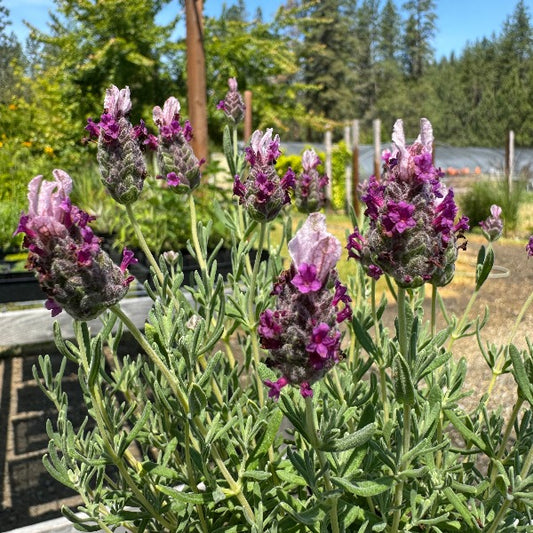
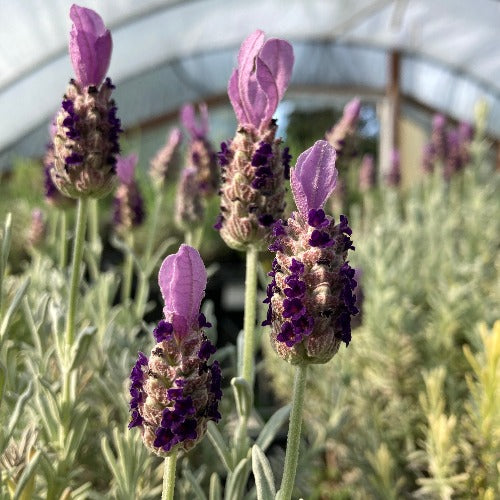
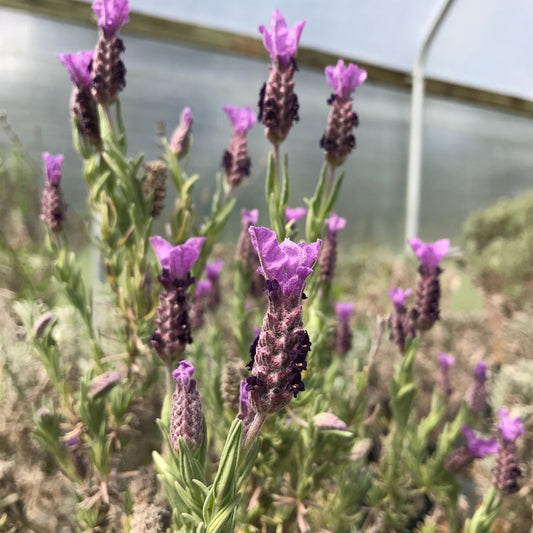
Lavandula stoechas — bold color, sculptural blooms, Mediterranean spirit
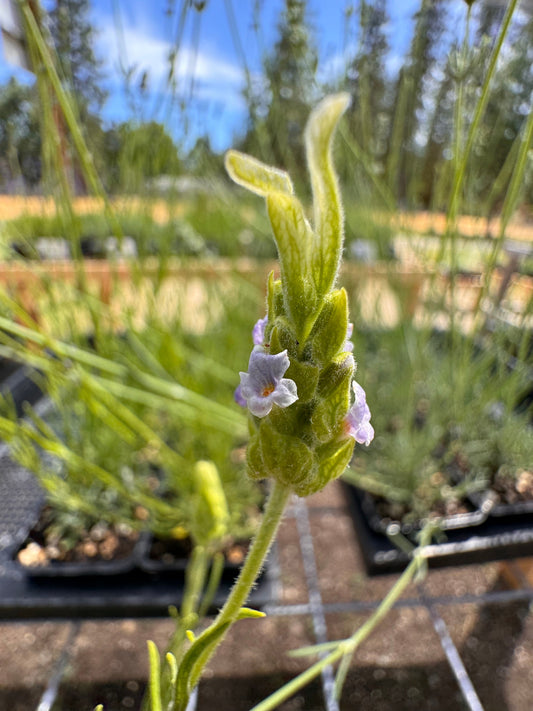
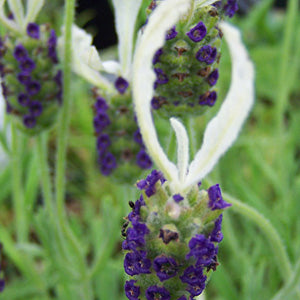
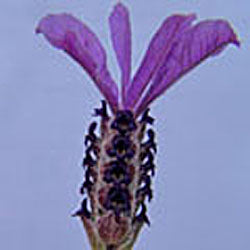
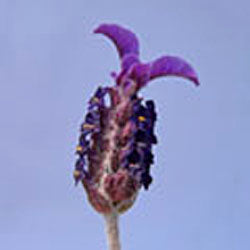
Spanish lavenders bring a completely different energy to the garden. With their distinctive “rabbit ear” bracts, vivid colors, and pine-scented foliage, Lavandula stoechas varieties are grown primarily for ornamental impact rather than harvest—and they excel at it.
This collection features our Spanish lavender cultivars, selected for gardeners in warm climates who want dramatic color, texture, and personality in containers, rock gardens, and sunny landscapes.
What Makes Spanish Lavender Different?
Spanish lavender stands apart from English and lavandin types in both appearance and growing needs:
-
Showy bracts perched above the flowers
-
Magenta, rose, or deep purple tones
-
Short flower stems (not intended for cutting)
-
Piney, resinous foliage fragrance
-
A more relaxed, slightly sprawling growth habit
These plants shine when viewed up close, where their sculptural blooms and rich color can be fully appreciated.
Best Uses for Spanish Lavender
Spanish lavenders are ideal for:
-
Containers & patio pots
-
Rock gardens
-
Mediterranean-style landscapes
-
Accent plantings near walkways or entries
-
Warm-climate gardens with excellent drainage
They are not typically used for culinary purposes or drying, and that’s a good thing—Spanish lavender knows its role and plays it beautifully.
Growing Requirements (Important!)
Spanish lavender is happiest when its Mediterranean roots are respected.
What it needs to thrive:
- Full sun
-
Excellent drainage (containers or raised areas are ideal)
- Dryer conditions once established
- Mild winters
Hardiness:
Most Spanish lavenders perform best in USDA Zones 8–10. In colder regions, they are best grown as annuals or overwintered in containers.
💡 If you garden in Zones 5–7, we recommend English lavenders or lavandins instead.
Spanish Lavender vs Other Lavender Types
|
Feature
|
Spanish Lavender (stoechas)
|
English Lavender (angustifolia)
|
Lavandin (x intermedia)
|
|
Primary Use
|
Ornamental
|
Culinary & fragrance
|
Drying & oil
|
|
Stem Length
|
Short
|
Short-medium
|
Long
|
|
Flower Look
|
Bracted, sculptural
|
Classic spikes
|
Large, bold spikes
|
|
Fragrance
|
Piney foliage
|
Sweet floral
|
Strong, camphor-forward
|
|
Climate
|
Warm
|
Cold-hardy
|
Cold-hardy
|
Who This Collection Is For
Spanish lavender isn’t subtle—and it isn’t meant to be.