


Order Now · Ships Spring 2026
Laurus nobilis (bay laurel)
Laurus nobilis (bay laurel)
Evergreen Mediterranean bay for cooking, tradition, and living kitchen gardens.
📦 Shipping is charged at real carrier rates.We don’t mark up shipping—costs reflect distance from our nursery and careful plant packing.
🌱 6-plant minimum per order — mix & match any varieties
📦 Ships in a 2⅜” square x 3¾” deep band pot — well-rooted & ready to plant
Couldn't load pickup availability
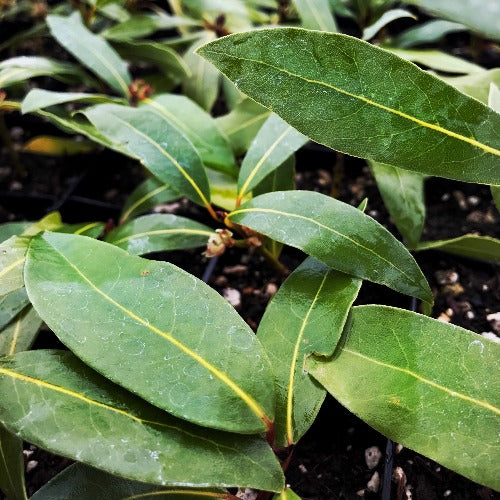
Bay laurel is a plant that feels both ancient and alive—one that carries stories of kitchens, ceremonies, and everyday meals across centuries. Its glossy evergreen leaves release a warm, spicy, slightly sweet aroma when crushed, instantly recognizable as the soul of soups, stews, and slow-cooked dishes.
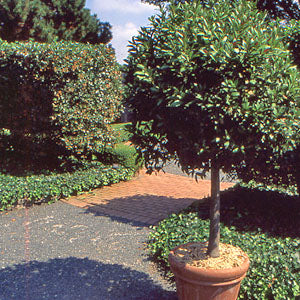
Native to the Mediterranean, bay laurel grows as a small tree or large shrub and can be shaped into a bush, standard, or elegant topiary. It thrives in large containers, making it perfect for patios, entryways, and kitchen gardens where you can harvest fresh leaves right when you need them.
Though traditionally listed for mild climates, bay laurel is tougher than it looks. With shelter and protection, mature plants can survive surprising cold—ours has lived for over 25 years near our home, reaching 12 feet tall and enduring temperatures down to -10°F.
GROWING NOTES
- Evergreen Tree or Large Shrub
- Height x Width: 10–20 ft x 10 ft
- USDA Zones: 8–10 (can survive colder with protection)
- Light: Full Sun to Part Shade
- Water: Moderate, well-drained soil
- Excellent for large containers
- Can be pruned into bush or topiary form
WHY YOU’LL LOVE IT
- Fresh bay leaves taste better than anything dried
- Deep roots in culinary and cultural history
- Evergreen beauty year-round
- Excellent container plant
- A living heirloom plant
TRADITIONAL & CULTURAL USES
Bay laurel has been treasured since ancient Greek and Roman times. It was used for:
- Culinary seasoning in nearly every Mediterranean culture
- Crowns and garlands for victory, wisdom, and honor
- Ritual, ceremonial, and protective traditions
- Digestive and warming folk practices
- Household scenting and herbal waters
The word “laureate” comes from this very tree—showing just how deeply bay is woven into human history.
Today, growing bay laurel means having one of the world’s most storied plants right outside your door.
Traditional use information is shared for educational purposes only and is not medical advice.
CULINARY INFO
Bay laurel is one of the most important foundation herbs in slow, savory cooking.
HOW IT’S TRADITIONALLY USED:
- Added whole to soups, stews, beans, and broths
- Used in braises, roasts, and long-simmered sauces
- Essential in bouquet garni and classic French cooking
- Common in Mediterranean, Latin, and Middle Eastern cuisine
FRESH VS DRIED Fresh vs Dried
- Fresh leaves are brighter and more complex
- Dried leaves are deeper and more concentrated
- Always remove whole leaves before serving
FLAVOR PROFILE
- Warm, slightly sweet, and herbal
- Adds depth rather than strong surface flavor
SIMPLE KITCHEN USES
- Add one leaf to a pot of rice or lentils
- Tuck into slow-cooked meats or vegetables
- Infuse into vinegar or oil for subtle seasoning
Bay leaves aren’t meant to dominate—they quietly hold a dish together.
PAIRS WELL WITH:
- Rosemary – classic Mediterranean flavors
- Thyme – soups and stews
- Sage – savory dishes
- Oregano – traditional cooking herbs
- Lavender – Mediterranean garden companions
- Parsley – fresh kitchen harvests
HARVESTING TIPS
Leaves
- Harvest any time of year from mature plants
- Choose healthy, dark green leaves
- Use fresh or dry for later use
Drying
- Air-dry leaves in a single layer or small bundles
- Dry in a warm, airy, shaded place
- Store in airtight containers away from light
Pruning
- Regular harvesting helps shape and thicken the plant
- Can be pruned into bush or topiary form
POT SIZE: 2⅜” square x 3¾” deep band pot
Share
What to Expect With Your Plants
What size plants will I receive?
Most plants ship in 2 3/8” x 3 3/4” band pots—ideal for healthy root growth.
Top growth varies by variety and season, but every plant arrives well-rooted, actively growing, and ready to plant.
Grown naturally without artificial heat or lights, our plants are hardy, adaptable, and ready to thrive in real garden conditions.
When will my plants ship?
We schedule plant orders based on your area’s average last frost date and when each plant is truly ready to ship. You’ll receive an email with your estimated ship date once your order is scheduled.
Orders ship Monday–Wednesday via UPS or USPS (2–3 day service), so your plants arrive before the weekend and spend less time in transit. Shipping begins in spring—usually mid-April—when weather and plant health align, so your plants arrive strong, well-rooted, and ready to thrive.
Do you guarantee your plants?
We stand behind our plants and our packing process. While we can't control weather or how plants are cared for after arrival, we do guarantee that your plants will arrive healthy and in good condition. If there's an issue, just reach out and we're happy to help.
Are your plants inspected for plant health and disease?
Yes. Our nursery is inspected at least twice each year by the Oregon Department of Agriculture and meets state plant health and disease standards.
Why does shipping cost what it does for live plants?
Shipping live plants requires careful packaging, seasonal timing, and fast transit to ensure they arrive healthy.
Our shipping rates are calculated in real time based on box size, weight, and destination, and we always select the best available option for safe, timely delivery.
We never inflate shipping costs — you pay what it costs us to ship your order safely.
Have more questions?
We want you to feel good about your plant order. Find answers about shipping, sizing, care, and guarantees in our full FAQ.
I’ve ordered many plans online, never have they been packaged and shipped with such care. They arrived in perfect condition and I truly appreciate that each one was labeled so I knew what they were.
Growing and healthy looking.